

July 8 2026
By The Ian Potter Foundation
This includes 6 Environment grants totalling $4,304,000 and 13 Medical Research grants totalling $1,987,500.
Below, we highlight some of these grants. All grants awarded can be found in our Grants Database.
Aussie Ark is a conservation organisation focused on protecting and recovering Australia’s threatened wildlife and ecosystems through conservation breeding, habitat protection, and rewilding. With more than a decade of high-standard captive breeding experience, it demonstrates strong technical capability, rigorous biosecurity, and evidence-based practice.
The organisation manages conservation sanctuaries in NSW and operates a specialised multi-species breeding facility, building large-scale insurance populations of endangered species.
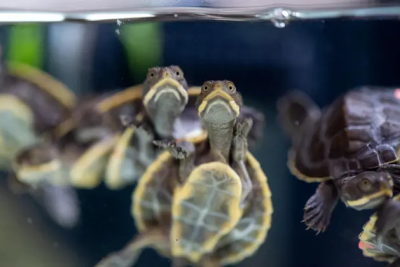
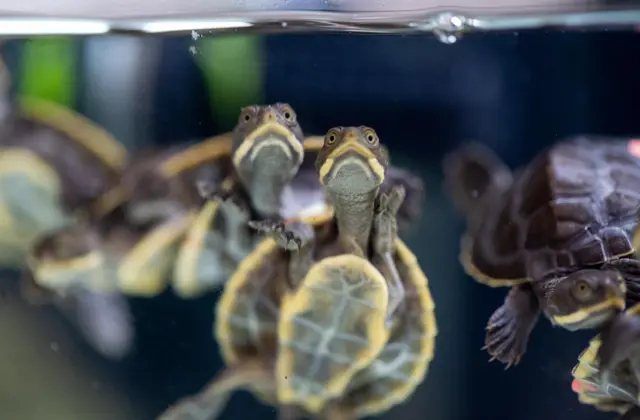
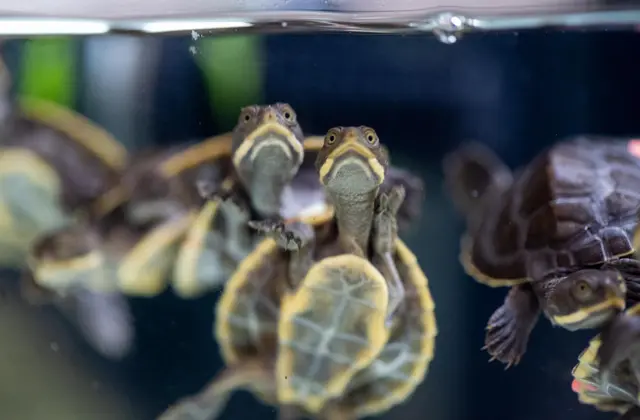
Aussie Ark is launching a three-year initiative to return endangered mammals, reptiles, amphibians, and freshwater turtles to functional ecosystems across NSW.
This project supports species recovery by translating breeding success into measurable ecological outcomes. Funding will support habitat restoration, site preparation, disease mitigation, health screening, development of release cohorts, and monitoring, as well as coordinated multi-species releases.
Delivered in partnership with research institutions, Indigenous ranger teams, government agencies and local councils, this initiative will rebuild ecological function and establish a national model for large-scale rewilding.
Conservation Partners (CP) was established in 2019 to address a gap in Australian conservation: delivering intensive, long-term threat abatement for threatened species and habitats on large-scale agricultural farms.
Its mission is to secure lasting conservation outcomes by working with landholders. It does this by integrating practical, science-guided management into routine agricultural decision-making, so that conservation activities strengthen, rather than burden, viable enterprises.
Through long-term partnerships at Artemis Station (Cape York) and Chidna Station (north-west Queensland), CP provides field capacity and coordination to enable consistent delivery of agreed threat-abatement actions, which include fire, invasive species and grazing-pressure management, alongside monitoring to track the ecological response of threatened species.
This grant will enable CP to scale this proven, practical conservation model that delivers meaningful environmental outcomes through long-term partnerships with farmers. CP will progress two additional projects, including a project in Patho Plains, Victoria, working alongside farmers to manage native grasslands for the benefit of the Plains-wanderer and other threatened species.
ORRCA (Organisation for the Rescue and Research of Cetaceans in Australia) is a not-for-profit organisation that operates a network of approximately 1,200 trained volunteers in NSW who act as first responders in marine mammal rescues, in partnership with government agencies, veterinarians and research institutions.
Marine mammals along Australia’s coastline face escalating pressures from climate change, disease, entanglements, vessel interactions and strandings. Protecting these species, and the coastal ecosystems they inhabit, requires a rapid, skilled and timely coordinated response supported by strong scientific knowledge and community awareness.
To provide rescue and rehabilitation support, ORRCA trains skilled volunteer responders. Currently, training is in-person, limiting accessibility for many volunteers, delaying the adoption of updated best-practice protocols, and contributing to inconsistent response capabilities and data-collection standards.
To meet growing incident demand, ORRCA is developing a scalable learning management system and eLearning platform to train and strengthen responder capability, improve the consistency of field practice and broaden engagement with marine mammal conservation.
The eLearning platform will be made available beyond ORRCA's volunteer network through a fee-for-service offer to government agencies, coastal and maritime organisations, research institutions and community partners that regularly encounter marine mammals.
This funding supports a Project Coordinator position to facilitate the updating of the training modules, communications and promotion of the training.
This is the first time the Foundation has awarded a Medical Research grant to Swinburne University. An Ex-Ray Photoelectron Spectrometer (XPS) works by exposing a material surface to X-rays and measuring the energy of the emitted electrons, producing definitive chemical fingerprints that are not achievable with other techniques.
This equipment will be amongst the most advanced systems in Australia, delivering sensitivity, spatial resolution, and analytical speed that place it at the forefront of global medical materials research. Researchers can engineer and test surface chemistry in biomaterials, implant coatings, antimicrobial technologies, and drug delivery platforms, enabling safer devices, longer-lasting implants, and more effective therapies.
Swinburne University’s research capacity will be expanded by eliminating reliance on already over-subscribed facilities at RMIT and preserving experimental integrity in a timely manner. The new equipment will address a critical need across multiple departments and the wider research community, including more than 20 ongoing multidisciplinary research programs.
This first-time grant supports the Translational Research Institute (TRI) in Brisbane to purchase the world's most advanced high-frequency ultrasound system (Vevo F2), designed specifically for preclinical research in small laboratory animals. The Vevo F2 uses ultra-high-frequency sound waves to produce exceptionally detailed, real-time images and functional data of tiny internal structures, such as mouse hearts, blood vessels, and developing embryos, enabling researchers to track disease progression and treatment responses non-invasively in living animals.
The equipment will be located in the TRI preclinical facility, the largest of its kind in Australia. This facility houses unique animal models, including humanised mice (mice with a human immune system), used to study cancer. The Vevo F2’s versatility enables researchers to measure critical biological functions that underpin advances in cardiovascular disease, cancer, metabolic disorders, and organ health. This purchase will fill a significant gap in Queensland's preclinical research infrastructure and strengthen research capacity across multiple institutions and nationally.
This grant contributes funding for the purchase of a Scintica Prospect T2, a cutting-edge high-frequency ultrasound platform that will significantly advance in vivo capabilities in preclinical experiments. Ultrasound is a 3D and 4D imaging modality that lends itself to non-invasive clinical research on small animals. This ultrasound system will be the only one of its kind in Tasmania and will be used by a broad range of medical researchers.
The Centre for Eye Research Australia (CERA) is an independent medical research institute that conducts research to prevent and treat eye disease and reduce the impact of vision loss on the community. This grant provides funding for a Beckman Coulter Optima XPN-100 ultracentrifuge, a critical instrument required to establish the Vision Vector Core facility.
This equipment will enable in-house production of research-grade viral vectors for delivering gene therapies into cells in preclinical eye research. Preparation of reliable, high-quality vector stocks is needed for the development of gene therapies. Access to high-quality vector production is currently a major bottleneck for ocular gene therapy research in Australia, with many research groups dependent on overseas providers. This leads to long turnaround times, high costs, reduced flexibility, and delays in advancing promising therapies. Currently, it is difficult to rapidly test and refine gene therapies for ocular diseases.
This instrument will significantly strengthen CERA’s research capacity by creating a shared, end-to-end platform for timely, high-quality vector production. It will support multiple translational programs in inherited retinal diseases, glaucoma, age-related macular degeneration, and other blinding conditions. It will also improve experimental speed, reproducibility, and the ability to move efficiently from discovery to preclinical validation.
Reducing vector production timelines from months to approximately 10 days will remove a major barrier to progress and accelerate the development of new gene therapies, strengthening CERA’s leadership in ocular gene therapy, and providing a shared translational resource supporting collaborations and gene therapy development for other inherited conditions.


We acknowledge the Traditional Custodians of the land on which we work. We pay our respects to their Elders past and present.

