

December 12 2025
By Sara Hearn
In December 2025, the Foundation introduced new funding objectives for its Public Health program. Going forward, this program seeks proposals for initiatives that incorporate the following key elements:
These projects are likely to require multi-year grants over longer periods and will demonstrate clear, upfront planning for sustainability, ensuring ongoing community benefit and potential scalability beyond the initial project.
Recently, the Foundation awarded six Public Health grants drawn from invited applications. Below are summaries of these initiatives and their applicability to the Foundation's new approach to Public Health, which focuses on community-led initiatives using scientific evidence-based approaches.
The Co-design Health Research & Innovation (CHRI) team, based in the Division of the Deputy Vice-Chancellor Indigenous at UNSW, has delivered high-impact, place-based research with priority populations for over a decade, using a refined co-design model grounded in collective impact. This five-stage, measurable model emphasises power and resource sharing. It enables communities to shape priorities, drive outcomes, and ensure sustained local benefit.
Ten4Ten is an ambitious, nationally scalable, community-led program aimed at transforming cardiovascular health in Tiny Towns, which are geographically defined communities with a population of less than 1,500 (defined as remote in the Modified Monash Model 5-7), where 7 million Australians live with health inequities that impact life expectancy. The initiative will demonstrate how place-based, tech-first health interventions can reduce preventable cardiovascular disease (CVD), improve health outcomes, and create long-term systemic change.
Australians living in rural and remote areas experience significantly worse cardiovascular outcomes than their urban peers. Preventable cardiovascular deaths are up to 70% higher in Tiny Towns compared to metropolitan areas. This health disparity disproportionately affects Indigenous Australians, older women and migrants. Contributing factors include limited access to care, late diagnosis, fragmented systems, and higher behavioural risk profiles (smoking, obesity, low physical activity, and poor nutrition). Delays in adopting new technologies, challenges with health literacy, and health messaging that is often inaccessible or irrelevant in small towns compound these challenges. Geography, culture, and systemic barriers converge to make achieving good health difficult in Tiny Towns.
In partnership with Aboriginal Medical Services, Local Health Districts, schools, councils and businesses, Ten4Ten directly addresses these structural inequities with co-designed, whole-of-community approaches that improve health literacy and access to personal health information, embeds technology within local, in-reach (bringing specialists into health care facilities) and outreach (taking specialists into communities) service systems, and drives proactive CVD management for the communities that need it most.
Brewarrina, NSW, is the first proposed Ten4Ten site and has been a CHRI partner for eleven years. Through this partnership, they have tackled cardiac arrhythmias, strengthened the local healthcare workforce, and implemented hearing health infrastructure.
The tech-first approach integrates wearable health technology and AI-supported CVD screening whilst also returning personal data to participants, enabling people to track their health over time. Screening data will be aggregated at the community level to provide meaningful and accessible comparisons to national trends. This will enhance health literacy and motivate participating communities to engage with personal and community-wide priorities. These priorities may include personal health plans to address CVD risks and community health plans to address structural, practice and policy barriers to good health.
The Youth Impact Foundation (TYIF) was founded and co-designed with young people and youth mental health charities in 2022 to deliver evidence-based preventative mental health and wellbeing programs to young people in schools, communities and families. Programs are scalable, co-designed with geographic communities to equip young people (aged 9-18) with the tools, knowledge and confidence to improve their mental health and wellbeing. TYIF specifically targets lower socio-economic, rural/regional, and First Nations populations and, in 2024, it impacted over 160,000 young people.
Despite numerous well-intentioned efforts, rates of youth suicide and mental ill-health remain alarmingly high, particularly among disadvantaged and marginalised young people. In Australia, suicide is the leading cause of death for those aged 15 to 24, with 38.8% of 16 to 24-year-olds experiencing a mental disorder lasting 12 months or longer, yet only 22.9% seeking professional help. The persistent and worsening crisis indicates a need for a more effective, collaborative, and scalable approach.
TYIF addresses this need through an innovative open-source, scalable, sustainable model of collaboration and consolidation, integrating mission-aligned charities with evidence-based programs under one organisation. The centralised service model provides shared service delivery of programs with experts in facilitation and event management helping organise and deliver programs, as well as back-end systems and processes (HR, IT, administration, finance, marketing, impact measurement, reporting, and governance), allowing program staff to focus on their core strength: program delivery. This model also provides talent retention, succession planning, and professional development opportunities.
This grant supports TYIF in undertaking the growth necessary to achieve sustainability and build its capacity to achieve two key aims: to demonstrate the effectiveness of its innovative model of collaboration and consolidation, and to enhance the mental health and wellbeing of young people across Australia.
The Macquarie University Lifespan Health and Wellbeing Research Centre aims to maximise emotional, social and cognitive health and wellbeing for all Australians regardless of age, background, or psychosocial advantage. The Centre has demonstrated experience in co-designing interventions with stakeholders to overcome the critical barriers that perpetuate inequities in mental health outcomes. The Centre includes the Emotional Health Clinic, which services over 1,500 clients a year via face-to-face, telehealth and digital interventions across the lifespan, provides professional development to over 500 clinicians a year, and develops and disseminates evidence-based therapy manuals across the world.
Macquarie University was approached by Eldercare, a not-for-profit aged care organisation, to address the challenge of reducing anxiety and depression among their residents. Depression and anxiety are common in older adults living in residential aged care facilities (RACFs), with up to 80% of residents experiencing depression and up to 60% experiencing anxiety. Despite the high prevalence rates in this population, few evidence-based psychological programs exist for use in RACFs, and the uptake of psychological treatment is poor. New interventions need to be deliverable by a wide range of RACF staff to overcome the shortage of psychologists and the expense of specialist care to ensure feasibility and scalability. The team at Macquarie University will meet this demand by adapting its established Ageing Wisely intervention, which has demonstrated effectiveness when delivered by allied health staff in community and hospital settings.
In partnership with Eldercare, this project aims to adapt and implement Ageing Wisely, an evidence-based psychological program for treating late-life anxiety and depression through a co-design process with residents and staff. Following implementation and pilot, the program will be evaluated for feasibility, acceptability, and effectiveness, and then upscaled and disseminated to other sites. Older adults in residential aged care are an underserved community that experiences barriers to access to psychological treatments and has limited capacity to organise or advocate for themselves.
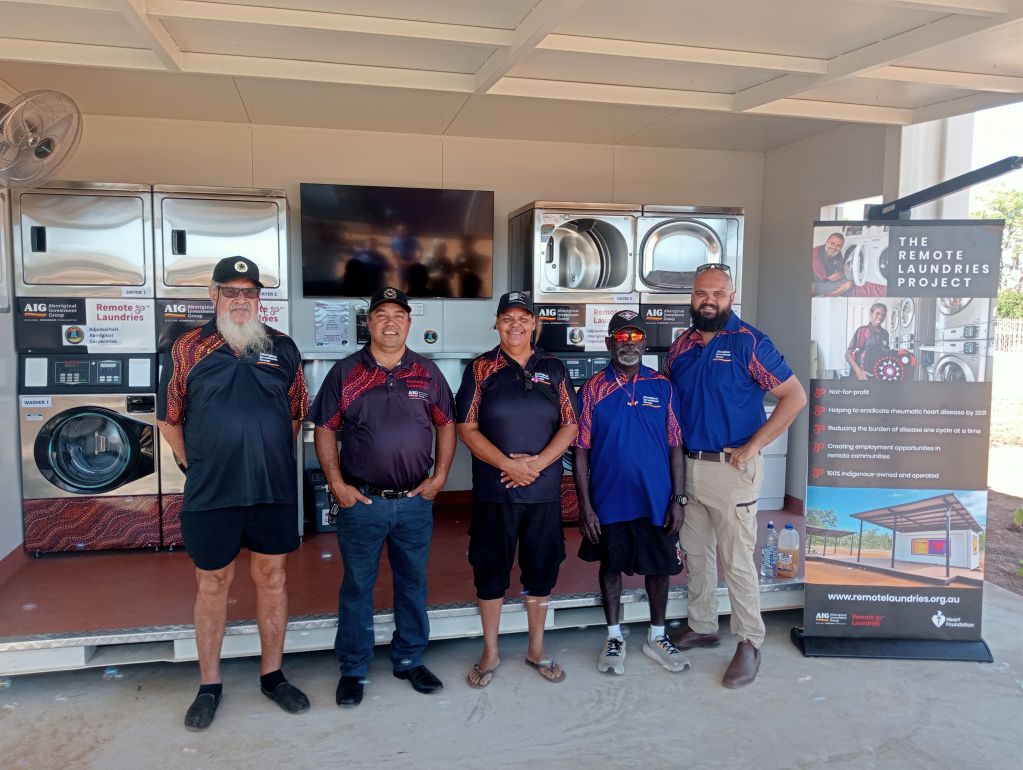
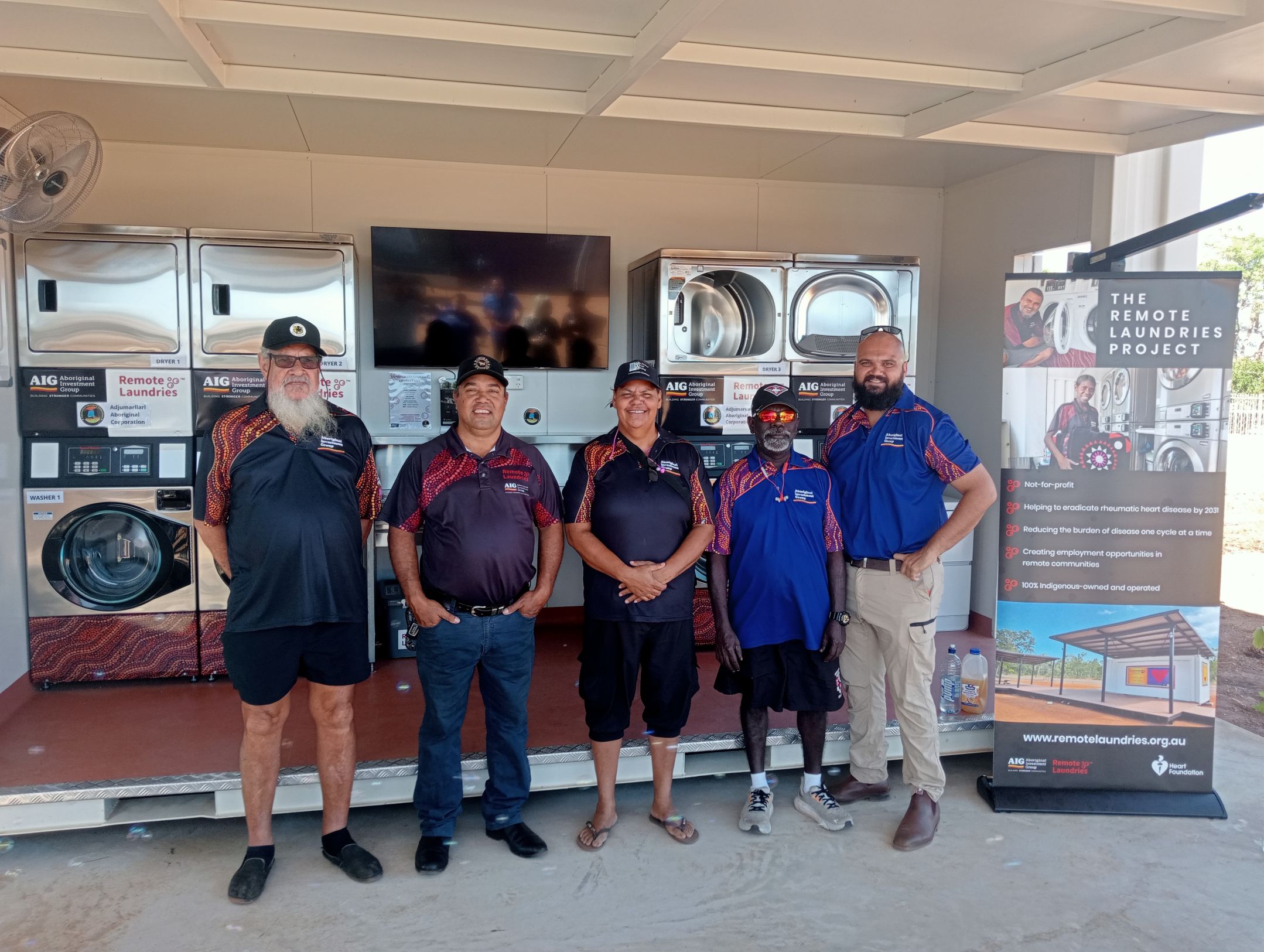
The Northern Australian Aboriginal Charitable Trust (NAACT) is the charitable arm of the Aboriginal Investment Group (AIG), a 100% Indigenous-owned and run corporation established in 1988. AIG's mission is to drive sustainable economic development and prosperity for Aboriginal people across the seven Northern Regions of the Northern Territory. The organisation's vision is realised through a dual focus on business support services and direct social enterprise, as seen in the Remote Laundries Project.
Aboriginal people living in remote communities are disproportionately impacted by diseases such as Scabies, Skin infections, Trachoma, bacterial diseases, Acute Rheumatic Fever (ARF), and kidney disease. Eighty per cent of Aboriginal children will be infected with scabies before their 1st birthday. Left untreated and or repeated infections lead to secondary complications like Rheumatic Heart Disease (RHD). 98% of people living with RHD in the NT are Indigenous and live in remote communities. These are diseases of poverty, driven by overcrowding and social and disadvantage.
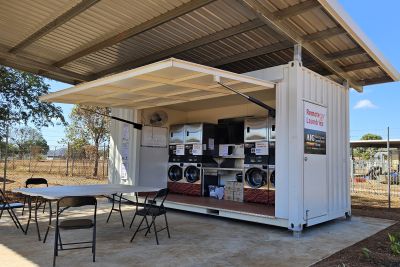
AIG's Remote Laundry project launched in 2018 as a direct response to persistent health and social challenges faced by remote Aboriginal communities in the Northern Territory. The project seeks to make laundry facilities available in remote communities - laundries are housed in secure shipping containers and provide free, year-round access to commercial-grade washing and drying facilities. The laundries offer employment, training and serve as hubs for health promotion to the local community, further reinforced through schools, the council, and local health clinics. AIG assists the community with economic development support so that each laundry is gradually transferred over to community ownership and operation (local decision making/self-determination). Gunbalanya is a remote community in the Northern Territory that is home to over 1200 Aboriginal people who, prior to the laundry operating, experienced a high incidence of ill health, driven by overcrowding in housing and a lack of access to commercial-grade washing facilities.
The Gunbalanya laundry, opened in August 2024 and was co-designed with the Adjumarllarl Aboriginal Corporation and Traditional Owners, ensuring that operations reflect local cultural practices and community needs. The facility is strategically located next to the recreation centre and across from the Health Clinic (Aboriginal community-controlled), maximising accessibility and integration with other health-promoting services. Since opening, the laundry has created employment for 10 staff members (including four high school students undertaking paid work experience) and completed over 3,000 cycles of washing.
This grant provides operational funding for the Gunbalanya laundry for three years to support the transition to community ownership and operation by the Adjumarllarl Aboriginal Corporation. In 2023, AIG partnered with the Heart Foundation and Flinders University to develop the Social Impact Framework, which articulates laundry outcomes delivered in association with Closing the Gap targets. The operationalisation of the framework is now being undertaken by AIG in conjunction with the CSIRO to evaluate the effectiveness of the Remote Laundries program as well as the impact that the laundries have on community-wide health, social and economic outcomes.
The Good Neighbourhood Project (formerly Norlane Community Initiatives) is a place-based community development organisation working in Norlane, Geelong—one of Victoria's most socioeconomically disadvantaged neighbourhoods. Established in 2017, it is committed to long-term, relational work that empowers residents to create change within their community for the benefit of their community.
This project will draw upon years of experience and connections that The Good Neighbourhood Project has developed to deliver a community-led and place-based public health revitalisation plan for Norlane. It will be co-designed with residents to address the unique strengths and challenges of the neighbourhood, which only those living in the area understand.
Norlane is a regional community experiencing high unemployment, food insecurity, social isolation and challenges with education, family breakdown, and substance abuse, which heavily impacts the social, economic, physical and mental well-being of its residents. The current neighbourhood environment is conducive to unhealthy eating habits and limited physical activity. The life expectancy of a Norlane resident is 74 years (compared to the Australian average of 82.5 years), and the burden of disease (including mental health) related to key modifiable risk factors, such as diet and physical activity, is significantly high.
The Foundation’s grant will support the design of a local health and wellbeing plan to ensure interventions are community-led, place-based, relevant, and responsive to the lived realities of Norlane residents.
Following the development of the health and well-being plan, two locally led public health initiatives will be implemented based upon priorities identified by the community. For example, if physical activity is a key priority area in the health and wellbeing plan, a strengths-based community-led approach to design and implementation actions would occur.
It is anticipated that service providers will then utilise this plan to guide future investments in the neighbourhood, based on community-identified priority areas. In addition, it is expected that this project will create an evidence-based framework that can be used by other communities when co-designing tailored neighbourhood health and wellbeing plans. This project has the potential to benefit thousands of residents and deliver lasting, systematic changes in community health and wellbeing.
This grant is a follow-up to previous public health funding provided by the Foundation to The Institute for Health Transformation (IHT), a research institute within Deakin University, for its #DigitalYouth project, which aimed to quantify, for the first time, children and young adults' total exposure to, and engagement with, harmful online marketing. SCANNER, an automated system capable of identifying and coding images related to unhealthy foods, e-cigarettes, gambling and alcohol, collected online screen capture data from three cohorts of youth (between the ages of 8 and 25) as they went about their digital lives.
Findings from this study showed that children are exposed to an average of 25 junk food advertisements, six alcohol advertisements, and two gambling advertisements each day they spend online. Advertisements also included interactive buttons that link children and young people to platforms where gambling, alcohol and unhealthy food products are sold. The project has attracted international attention from the UK, Ireland, Canada and Denmark, resulting in collaborations to conduct similar studies around unhealthy food advertising in those countries.
The Australian Government's decision to ban social media for children under 16 (effective December 2025) will significantly reshape the digital environments of young people. The #DigitalYouth project tools offer a unique opportunity to evaluate how the policy protects children from harmful digital marketing and to identify any unintended effects, such as shifts to other platforms, increased exposure for older teens, or changes in access to health information and social connections.
#DigitalYouth – Phase 2 will utilise baseline data from the #DigitalYouth initiative, collaborating with established policy networks to co-design research with policymakers, partner organisations, and the community. This approach aims to generate evidence necessary to inform future policy decisions. The consequences of the Online Safety Amendment (Social Media Minimum Age) Act 2024 will be evaluated by following up baseline participants from the #DigitalYouth study, allowing for within-person comparisons before and after the ban.
All grants awarded can be viewed in the Grants Database.


We acknowledge the Traditional Custodians of the land on which we work. We pay our respects to their Elders past and present.

